

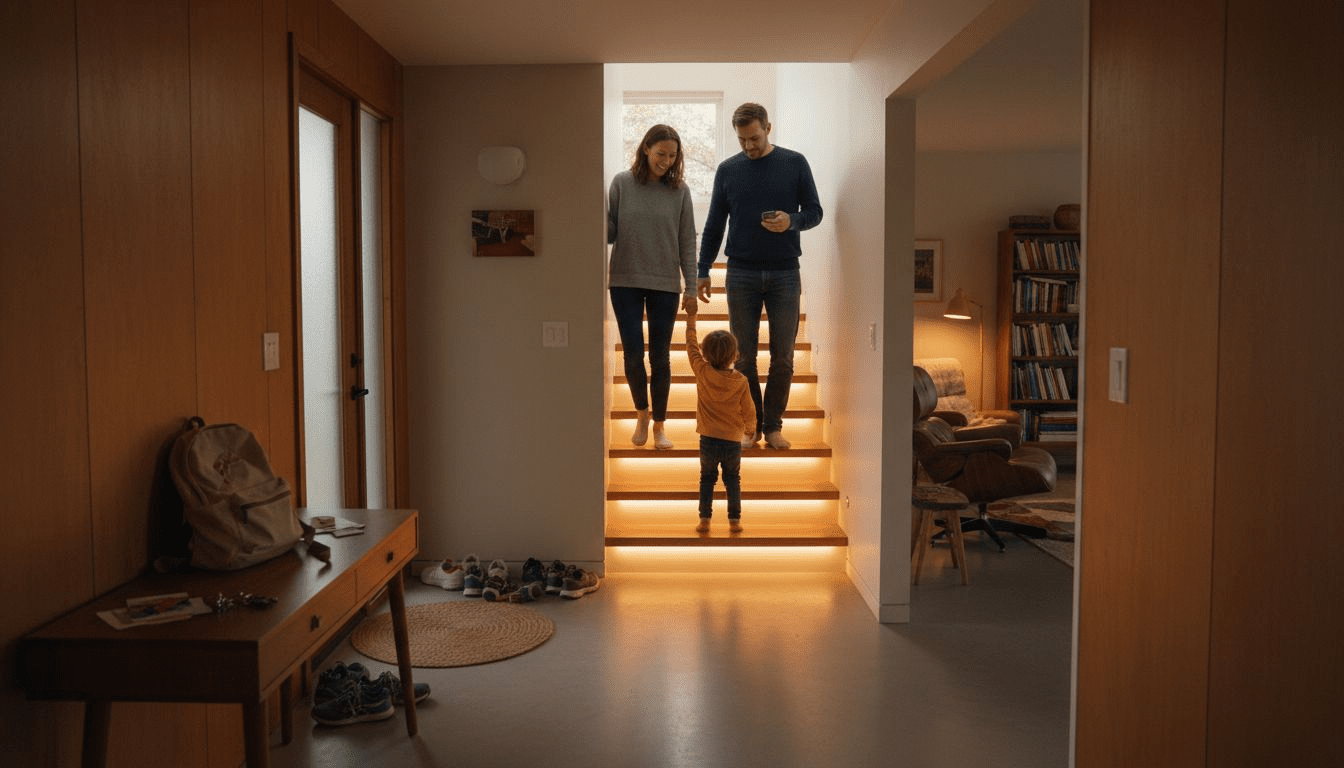
Walking through dim hallways or stumbling on stairs at night can make any home feel less safe and comfortable. Fumbling for a light switch in the dark interrupts your routine and increases the risk of accidents, especially if you have kids, seniors, or simply want worry-free movement after sunset. Finding the right lighting solutions means more than just bright bulbs—it’s about convenience, safety, and creating the right atmosphere for every corner of your house.
This list unpacks smart and practical lighting options that address real-life needs. You will discover how motion sensor lights, wireless LED strips, and other innovations offer hands-free operation, energy savings, and simple installation tailored to your space. Get ready for clear tips and new ideas that actually make life at home safer, more convenient, and even a bit more stylish.
| Key Insight | Clarification |
|---|---|
| 1. Utilize Motion Sensor Lights | Place these lights in high-traffic areas to enhance safety and convenience during nighttime navigation. They activate upon detecting movement, providing illumination where needed without manual operation. |
| 2. Install Wireless LED Strips | Use adhesive-backed LED strips to create custom lighting effects easily in any room, enhancing both aesthetics and functionality while connected to your smart home network. |
| 3. Implement Rechargeable Stair Lights | Position rechargeable lights on steps to improve safety, activating automatically as you move. Their soft glow prevents harsh lighting that can disrupt sleep. |
| 4. Use Daylight Detection Lights | These lights automatically adjust based on natural light levels, helping to conserve energy and maintain comfortable visibility while optimizing your home’s lighting efficiency. |
| 5. Adopt Tunable White Lighting | Adjust the color temperature of your lights throughout the day to align with your body’s circadian rhythms and create the desired ambiance in each room. |
Motion sensor lights represent one of the most practical advances in home automation, automatically illuminating spaces only when movement is detected. This type of smart lighting eliminates the need to fumble for switches in dark hallways, on staircases, or in other areas where your hands might be full. Unlike traditional lights that stay on continuously, motion activated systems turn on instantly when you enter a space and turn off after a set period of inactivity, creating a seamless experience that feels almost invisible in your daily routine.
The appeal of motion sensor lights goes far beyond convenience. Rechargeable motion sensor lights provide energy-efficient illumination with long battery life and easy installation using magnetic or adhesive mounts, making them ideal for renters and homeowners alike. You get the benefit of enhanced nighttime safety by lighting your path exactly when you need it, without wasting electricity on empty rooms. Many modern motion sensor lights offer adjustable settings for brightness and color temperature, allowing you to customize the lighting to match your home’s atmosphere. For instance, softer warm tones work wonderfully in bedrooms and hallways, while brighter, cooler light might be better suited for kitchens or entry spaces. The combination of automatic detection, long battery life, and customizable features makes these lights adaptable to virtually any room in your home where safety and convenience matter most.
When you install motion sensor lights in high-traffic areas like staircases, hallways, or entryways, you’re creating an intelligent lighting system that responds to your movements without any manual input. The sensors detect motion within a certain range and distance, triggering instant illumination that guides your way safely. Because they only activate when needed, you can position multiple sensors throughout your home without worrying about excessive energy consumption or constant illumination. This makes them particularly valuable for nighttime navigation when you want subdued, automatic lighting without disturbing sleeping household members.
Pro tip: Place motion sensor lights at the top and bottom of staircases rather than just in the middle, ensuring complete visibility of each step regardless of where you enter from.
Wireless LED strips represent a flexible approach to smart home lighting that goes beyond basic illumination. These thin, adhesive-backed strips of connected LEDs can wrap around virtually any surface, from under kitchen cabinets to the back of your television or along staircase edges. Unlike traditional accent lighting that requires professional installation and wiring, wireless LED strips plug into power sources and connect to your home network, giving you control over color, brightness, and effects from your smartphone or voice assistant. This flexibility makes them one of the most adaptable lighting solutions available for homeowners looking to enhance both safety and aesthetics.
What makes wireless LED strips particularly valuable is their combination of form and function. Smart LED strip lights feature addressable LEDs for multi-color effects, including RGB and white LEDs that can provide both atmospheric accent lighting and practical illumination. You can set warm white tones for ambient ambiance in living rooms or bedrooms, then switch to brighter cool white when you need task lighting in kitchens or home offices. The wireless connectivity means you adjust colors and brightness without touching a physical dimmer switch. Many strips also offer scheduling features, allowing you to program them to turn on at sunset or activate when motion is detected in certain areas. This level of customization transforms how light functions in your home, serving dual purposes as both decorative elements and safety features.
Practical applications for wireless LED strips abound in residential spaces. Under cabinet lighting illuminates countertops for safer food preparation while creating an inviting kitchen atmosphere. Staircase edge lighting guides people safely down steps at night by illuminating each tread. Behind entertainment centers, colored strips add visual interest while reducing screen glare that can cause eye strain. The long lifespan of modern LED technology means these strips can last at least ten years, making them a durable investment that won’t require frequent replacements. Since they’re wireless and require only a power outlet, installation takes minutes instead of hours. You can even remove them without damaging walls if you decide to relocate or reconfigure your lighting setup.
Pro tip: Install LED strips along the baseboards of hallways and bedrooms to create a soft nighttime navigation path that won’t jolt anyone awake with sudden bright light.
Stairs present one of the greatest fall risks in any home, especially during nighttime hours when visibility drops dramatically. Rechargeable step and stair lights address this hazard by placing illumination exactly where you need it most, on each individual tread or riser. These specialized lights mount directly onto stairs and activate when motion is detected, casting a soft glow that guides your feet safely without the jarring brightness of overhead lighting. This type of targeted illumination has become a game changer for families with elderly members, young children, or anyone navigating stairs in low light conditions.
Rechargeable stair lights combine several safety advantages into one simple solution. Motion sensor stair lights offer hands-free illumination triggered by your movement, eliminating the need to search for wall switches or risk a fall while reaching for controls. The soft, warm light output is specifically designed for nighttime visibility, creating enough illumination to see each step clearly without overwhelming your eyes or disrupting sleep if someone else is resting. Installation requires no electrical work or complicated wiring. You simply use magnetic or adhesive mounts to secure the lights to your stairs, and they’re ready to go. The rechargeable batteries mean you can charge them via USB whenever needed, and modern designs offer impressive battery life that keeps your stairs lit for weeks between charges. This combination of easy installation, wireless operation, and long battery performance makes them ideal for renters, older homes without extensive electrical infrastructure, and anyone seeking a quick safety upgrade.
The practical impact of stair lighting becomes most apparent during nighttime bathroom trips or when carrying items down steps. Without proper illumination, even one misstep can result in serious injuries. Sensor lights for stairs improve nighttime navigation safety by creating a clear visual path that reduces fall risks in dim conditions. You can choose motion-activated modes for energy efficiency or continuous light settings for hallways that experience frequent traffic. The coverage angles on quality stair lights are specifically designed for indoor staircases, ensuring even lighting across treads and risers. Many households find that adding stair lights also helps with daytime safety, especially in basements or lower level stairs where natural light doesn’t reach. When combined with motion sensor activation, these lights create an intelligent safety system that responds to your household’s natural movement patterns.
Pro tip: Install stair lights on every third or fourth step for cost-effective coverage, then add extra lights on landings where direction changes occur or where people pause.
Daylight detection lights represent an intelligent approach to home automation that works with nature rather than against it. These smart lights use built-in sensors to measure incoming natural light levels throughout the day, then automatically adjust your artificial lighting to compensate. When sunlight streaming through your windows provides sufficient illumination, the lights dim or switch off entirely. As evening approaches and natural light fades, they gradually brighten to maintain consistent, comfortable visibility. This automatic response system transforms how your home uses electricity, eliminating the wasteful habit of running lights during daylight hours or forgetting to turn them off as the sun sets.
The technology behind daylight detection is straightforward but remarkably effective. Daylight sensors adjust smart lighting based on natural light levels, dimming or turning off lights when sufficient natural light is present to save energy. Combined with motion detection and other smart home sensors, this approach creates a dynamic lighting system that responds to your actual needs rather than a fixed schedule. Imagine a kitchen that automatically reduces lighting intensity on a bright afternoon when sunshine floods through windows, then gradually increases brightness as clouds move in or evening arrives. A home office with daylight sensing might keep overhead lights off during the morning when natural light dominates the space, then activate them only when you really need them. Smart lighting systems optimize energy use through daylight harvesting, which combines sensor data with natural light information to reduce artificial lighting consumption while maintaining comfort and productivity.
The practical benefits extend well beyond simple energy savings. Daylight detection creates more comfortable living environments because lighting levels shift gradually with natural changes, matching your body’s circadian rhythms. This is particularly valuable in bedrooms, where early morning light triggers the sensors to keep artificial lights off and allow natural sunrise to wake you gently. In home offices and workspaces, appropriate lighting levels reduce eye strain and support sustained focus. Kitchens benefit from intelligent dimming that prevents glare while maintaining safe working conditions at countertops and appliances. Over months and years, the cumulative electricity savings from lights that run only when truly needed adds up significantly on your utility bills. You also spend less time thinking about manual adjustments because the system responds automatically to changing daylight conditions. For tech-savvy homeowners seeking to reduce both their environmental impact and energy costs, daylight detection lighting provides a set-it-and-forget-it solution that works continuously in the background.
Pro tip: Place daylight sensors near windows or in areas that receive the most natural light, but avoid direct sunlight hitting the sensor, which can cause it to misread actual usable light levels in the rest of your room.
Tunable white lighting gives you control over the color temperature of your lights, allowing you to shift between warm and cool tones depending on the time of day and your immediate needs. Unlike standard bulbs that emit a single fixed color temperature, tunable white lights let you adjust everything from cozy warm amber tones to bright cool white illumination with a simple app command or voice assistant request. This flexibility transforms how your home feels throughout the day and night, supporting both your circadian rhythms and your desired atmosphere in any given moment.
The science behind tunable white lighting lies in color temperature, measured in Kelvin. Warm white light around 2700K to 3000K mimics the sunset and triggers your body to produce melatonin, the hormone that promotes sleep. Cool white light at 4000K to 5000K resembles midday sunlight and promotes alertness and focus. By adjusting these settings throughout the day, you create lighting that naturally supports your body’s internal clock while also matching the mood you want in each room. Morning coffee in the kitchen benefits from bright, cool light that wakes you up and energizes your mind. Evening relaxation in the living room calls for warm, dimmed light that encourages calm and prepares your body for sleep. Layer lighting techniques enhance the overall ambiance of your spaces, and tunable white lighting becomes a powerful tool for creating those layers with precision control over color temperature alongside brightness levels.
The practical applications of tunable white lighting extend beyond comfort into genuine health benefits. Home offices benefit from consistently cool, bright light that reduces eye strain and maintains productivity during work hours. Bedrooms equipped with tunable lights allow you to create an optimal sleep environment by gradually warming color temperature in the evening, signaling your body that bedtime approaches. Dining areas can shift from cool tones during meal preparation to warm ambient light for entertaining guests. Parents appreciate having cool, bright light available when helping kids with homework, then switching to warm tones for calming bedtime routines. Because these lights connect to your smart home system, you can automate color temperature changes tied to specific times of day or even control them manually whenever your needs shift. The combination of convenience and health benefits makes tunable white lighting a worthwhile investment for any room where you spend significant time.
Pro tip: Set your bedroom lights to warm white at least one hour before bedtime and keep them in this warm setting throughout the night to support natural melatonin production and improve sleep quality.
Smart bulbs with app and voice control represent the foundation of modern home automation, transforming ordinary light fixtures into intelligent devices that respond to your commands instantly. These connected bulbs replace traditional incandescent or LED bulbs in standard light sockets, then sync with your smartphone or tablet through a dedicated app or integrate with popular voice assistants like Alexa, Google Assistant, or Siri. Once connected, you gain the ability to control your lights from anywhere in your home or even remotely while away, adjusting brightness, changing colors, and setting custom schedules without ever touching a physical switch.
The technology enabling this convenience is surprisingly simple. Voice control smart bulbs connect via Wi-Fi, Bluetooth, or Zigbee and integrate seamlessly with major voice assistants, allowing you to adjust brightness, colors, and schedules with simple spoken commands. Imagine walking into a dark bedroom and saying “Alexa, turn on the lights,” or requesting “Google, dim the living room lights to 40 percent.” The bulbs respond instantly without you needing to find a switch in the darkness. Beyond voice commands, mobile apps provide granular control that goes far beyond what traditional dimmers offer. You can create lighting scenes for different activities, schedule lights to turn on gradually in the morning to simulate sunrise, or set them to flash when your phone alarm goes off. Smart bulbs enable seamless app and voice control along with dimming, color changes, and scheduling capabilities that transform how you interact with your home’s lighting.
The practical advantages extend into genuine safety and efficiency improvements. When you’re away from home, you can control lights remotely to simulate occupancy, creating the appearance that someone is home and deterring potential intruders. Automating your lights based on your daily routine saves energy by ensuring lights turn off automatically when rooms are unoccupied. Elderly household members or people with mobility challenges benefit from voice control that eliminates the need to locate and reach physical switches. You can create custom lighting routines that adapt to different times of day, moods, or activities. Morning routines might gradually brighten lights while brewing coffee, while evening routines could dim all lights to warm tones in preparation for sleep. Parents appreciate being able to control bedroom lights from their phone, turning them off after children fall asleep without entering the room. The combination of convenience, safety, energy savings, and customization makes smart bulbs an accessible entry point into home automation that immediately improves how you live.
Pro tip: Start with smart bulbs in high-traffic areas like bedrooms, kitchens, and entryways where you most frequently reach for light switches, then gradually expand to other rooms as you become comfortable with voice and app control.
Integrated dimmers and schedulers represent the most advanced form of lighting control available to homeowners, replacing traditional wall switches with intelligent devices that manage your entire lighting ecosystem from a single location. These smart switches mount directly into your existing wall switch boxes and give you precise control over brightness levels, automated schedules, and customized lighting scenes without requiring any changes to your light fixtures. Instead of fumbling with multiple switches or reaching for your phone every time you want to adjust a light, you interact with an intuitive wall mounted interface that also connects to your smart home system for app and voice control.
The power of integrated dimmers and schedulers lies in their ability to learn your patterns and adapt accordingly. Smart dimmers and switches offer app and voice control along with scheduling and scene programming capabilities that provide improved lighting customization and energy savings. You can program your dimmer to gradually brighten lights in the morning starting 30 minutes before your alarm, creating a natural wake-up experience without jolting yourself awake. In the evening, you can set the dimmer to slowly reduce brightness and shift to warmer tones, cueing your body that bedtime approaches. Scene programming lets you create preset configurations for different activities. A “movie night” scene might dim all lights to 10 percent and shift to warm tones, while a “dinner party” scene could set dining room lights to 75 percent at cool white temperatures. The scheduler handles automation, turning lights on and off at specified times even when you’re not home. This combination of dimming precision, scheduling flexibility, and scene customization transforms how you experience lighting throughout your day.
The practical benefits extend beyond convenience into genuine improvements to your home’s functionality and safety. Integrated dimmers enable smart home automation that enhances safety and efficiency by allowing you to control lighting based on occupancy, time of day, or specific activities. Families appreciate being able to set a “bedtime routine” that dims hallway lights to a soft glow, guiding kids to bed safely without bright overhead illumination. Security improves when you schedule lights to turn on and off in patterns that simulate occupancy while you’re away traveling. Energy efficiency gains come from dimming lights appropriately rather than running them at full brightness constantly. Since dimmers reduce the amount of power flowing to bulbs, you save money on electricity while also extending bulb lifespan significantly. Installation may require basic electrical work, but many newer homes already have the necessary neutral wires to support these devices. Once installed, the learning curve is surprisingly gentle because the physical wall interface remains intuitive even as the underlying technology becomes more sophisticated.
Pro tip: Create separate scenes for morning routines, daytime work, evening relaxation, and nighttime navigation, then assign each to a favorite or double-tap action on your smart dimmer for instant access without voice commands.
Below is a comprehensive table summarizing the key insights from the article, illustrating various modern lighting solutions and their benefits.
| Lighting Type | Features | Applications and Benefits |
|---|---|---|
| Motion Sensor Lights | Automatically activate bright lighting and turn off after a period of inactivity. | Ideal for hallways and staircases, providing safety, energy efficiency, and convenience without manual input. |
| Wireless LED Strips | Flexible adhesive LED strips with customizable colors, brightness, and effects via smartphone or voice control. | Suitable for accent lighting under cabinets or furniture, enhancing ambiance and safety with easy installation. |
| Rechargeable Stair Lights | Motion-activated, USB rechargeable lights with magnetic or adhesive mounts. | Enhance visibility on stairs, increasing safety and reducing accident risks for all family members. |
| Daylight Detection Lights | Integrate sensors that adjust lighting based on natural light levels. | Automatically save energy and maintain comfort by dimming or turning off lights when natural light is sufficient. |
| Tunable White Lighting | Allows adjustment of color temperature from warm to cool tones for ambiance. | Supports circadian rhythms, aids focus or relaxation by matching lighting to time of day. |
| App and Voice-Controlled Bulbs | Smart bulbs with Wi-Fi/Bluetooth connectivity for easy management via devices or voice assistants. | Offers convenience, energy efficiency, and enhanced customization of lighting conditions. |
| Integrated Dimmers & Schedulers | Wall-mounted smart switches enabling timed and adjusted light settings with scenes. | Provides intuitive control, energy savings, and the flexibility to tailor lighting to daily activities. |
The table encapsulates the essence of how modern lighting options can significantly enhance safety, efficiency, and convenience in various home environments while being energy-efficient and easy to install.
The challenge of maintaining safe, energy-efficient, and convenient lighting throughout your home is real. Whether you are concerned about the risks of navigating dark stairs or want to automate your lighting to respond naturally to your daily routine, smart lighting offers a personalized solution. Discover how motion sensor lights, wireless LED strips, and adjustable tones can transform your home environment, improving your comfort and preventing accidents with intuitive, hands-free operation.
Explore our Smart Motion Sensor Lights Collection to find easy-to-install, rechargeable lights that activate only when you need them. These lights provide safety without wasting energy and are designed for homes like yours. To find versatile accent lighting that effortlessly adapts to your spaces, discover our Best Sellers featuring wireless LED strips and smart bulbs with app control. Start your journey toward a safer and smarter home today by visiting https://tryilluminate.co. Make your home safer and smarter now with effortless upgrades that fit your lifestyle perfectly.
Motion sensor lights automatically turn on when they detect movement, providing illumination exactly when you need it. Install these lights in high-traffic areas like hallways and staircases to enhance nighttime safety and prevent falls.
Wireless LED strips can be placed virtually anywhere to create both decorative and practical lighting solutions. Use these strips under cabinets or along staircases to provide soft illumination that enhances safety and adds style to your space.
Rechargeable stair lights activate when they detect motion, illuminating each step without the harshness of overhead lighting. Position these lights on every third or fourth step to guide your way safely during nighttime hours without requiring complicated installation.
Daylight detection lights automatically adjust based on the natural light available in your space, dimming or turning off when sunlight is sufficient. Place these lights near windows to optimize their energy-saving capabilities, potentially reducing your electricity usage by up to 30%.
Tunable white lighting allows you to adjust the color temperature from warm to cool based on the time of day and your needs. Set your lights to cool white during morning routines for alertness and switch to warm tones at night to promote relaxation and better sleep.
Smart bulbs can be controlled remotely via an app or voice commands, allowing you to adjust brightness and settings effortlessly. Start by replacing bulbs in high-traffic areas to experience instant convenience and control over your lighting preferences.

Why Choose Wireless Lighting for Modern Homes
Wireless lighting lets homeowners upgrade convenience, safety, and energy efficiency. Explore how wireless lights work, types, costs, and key benefits.
Read more
What Is Motion Sensor Lighting and Why It Matters
What is motion sensor lighting? Discover types, smart features, and home benefits. Learn how it boosts safety, saves energy, and simplifies everyday life.
Read more