

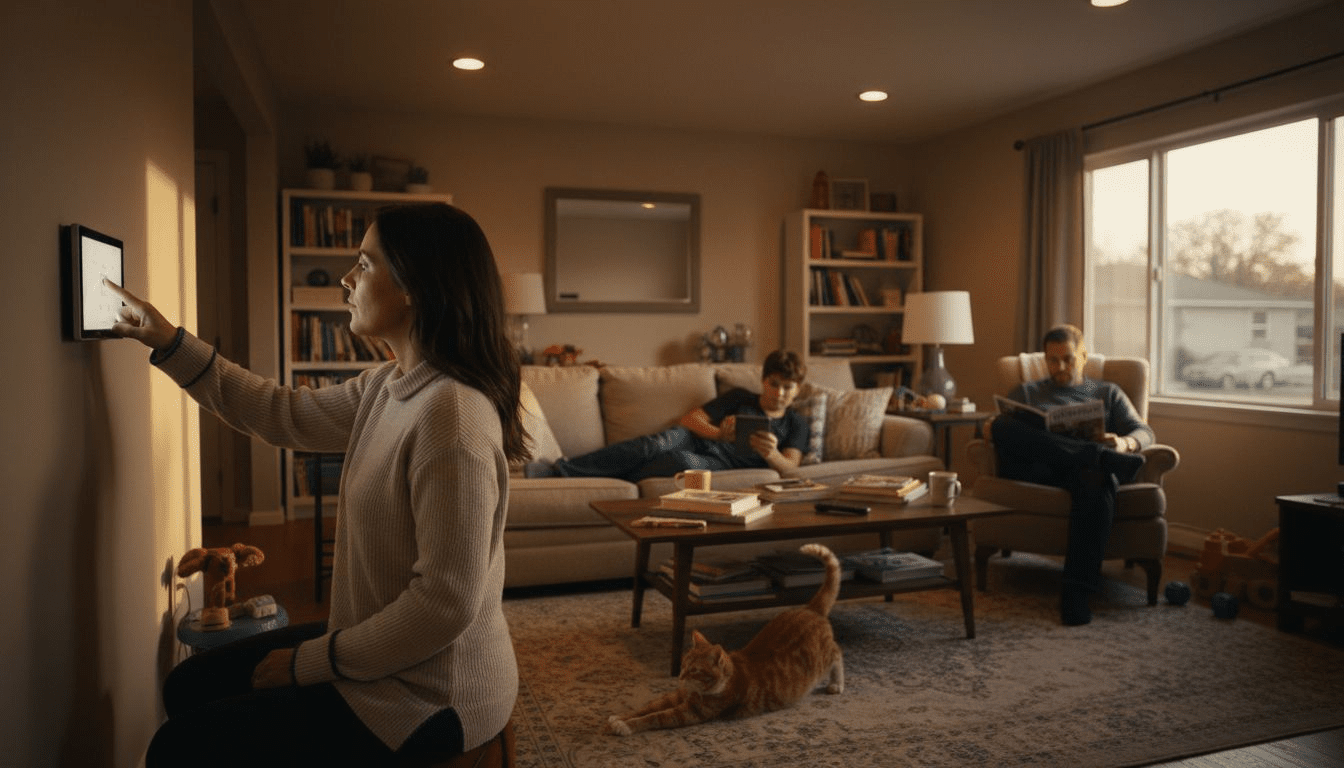
Many tech-savvy homeowners want more control, convenience, and energy efficiency in their living spaces. Constantly adjusting lights or worrying about security can be frustrating, especially in busy households. Home lighting automation blends smart devices, wireless networks, and powerful sensors to create customizable lighting experiences that improve comfort and safety. This guide breaks down how these intelligent systems work and helps you avoid common DIY mistakes while designing a solution that fits your home and lifestyle.
| Point | Details |
|---|---|
| Home Lighting Automation Enhances Convenience | Smart lighting systems allow homeowners to customize and automate their lighting based on occupancy, preferences, and time of day. |
| Safety and Energy Savings are Key Benefits | Intelligent lighting can improve home security while significantly reducing energy costs through responsive management. |
| Consider Compatibility and Scalability | When selecting smart lighting, choose systems that work with existing infrastructure and allow for future upgrades. |
| Avoid Common DIY Mistakes | Plan carefully to prevent issues such as incompatible devices and poor network security during installation. |
Home lighting automation transforms how homeowners interact with their residential lighting systems, introducing intelligent control and unprecedented convenience. At its core, home automation systems represent a technological ecosystem where lighting becomes dynamic, responsive, and customizable through smart devices and wireless networks.
These intelligent systems integrate advanced technologies that allow lights to communicate via internet protocols and wireless networks like Wi-Fi, Zigbee, and Z-Wave. By connecting smart bulbs, sensors, and control hubs, homeowners can program lighting scenarios that adapt automatically to occupancy, time of day, or specific preferences. The system enables actions such as scheduling lights to turn on gradually in the morning, dimming during movie nights, or activating security lighting when motion is detected.
The primary components of home lighting automation include smart bulbs, motion sensors, wireless network protocols, and central control hubs. These technologies work together to provide multiple benefits: enhanced home security, significant energy savings, improved comfort, and personalized lighting experiences. Smart lighting networks can reduce electricity consumption by intelligently managing illumination based on actual usage and environmental conditions.
Pro tip: Start your home lighting automation journey by selecting a single room or area to experiment with smart lighting technologies, allowing you to understand the system’s capabilities without overwhelming yourself with a full home installation.
Smart lighting systems come in diverse configurations, each designed to address specific home automation needs and enhance residential lighting experiences. Lighting control technologies range from basic manual controls to advanced networked solutions that intelligently adapt to environmental conditions and user preferences.
The primary categories of smart lighting systems include motion sensor lights, occupancy sensors, photocells, timer-based controls, and fully networked intelligent lighting networks. Motion sensor lights automatically activate when movement is detected, providing enhanced security and energy efficiency. Occupancy sensors work similarly but can distinguish between occupied and unoccupied spaces, allowing more precise control. Lighting control systems also incorporate photocells that adjust illumination based on available natural daylight, ensuring optimal brightness while minimizing unnecessary electricity consumption.
Advanced smart lighting networks integrate multiple control mechanisms, enabling homeowners to create complex lighting scenes that respond to specific triggers. These systems can be programmed to simulate occupancy during travel, gradually adjust brightness throughout the day, or synchronize lighting with other home automation features like security systems or entertainment setups. Wireless protocols such as Wi-Fi, Zigbee, and Z-Wave enable seamless communication between different smart lighting components, creating a cohesive and intelligent home lighting ecosystem.
Pro tip: When selecting a smart lighting system, prioritize compatibility with your existing home infrastructure and choose a scalable solution that allows gradual expansion of your home automation capabilities.
Wireless lighting automation represents a sophisticated technological approach that transforms traditional lighting control through advanced communication networks. Wireless sensor networks enable intelligent lighting systems to collect and process environmental data in real time, creating responsive and adaptive illumination experiences for homeowners.
The core mechanism of wireless lighting automation involves a complex interaction between sensors, wireless communication protocols, and control units. Devices utilize specialized wireless protocols like Wi-Fi, Zigbee, Z-Wave, and wireless DALI communication to transmit data and commands between different components. These networks allow lighting systems to continuously monitor factors such as occupancy, natural light levels, time of day, and user preferences, enabling automatic adjustments that optimize both energy efficiency and user comfort.
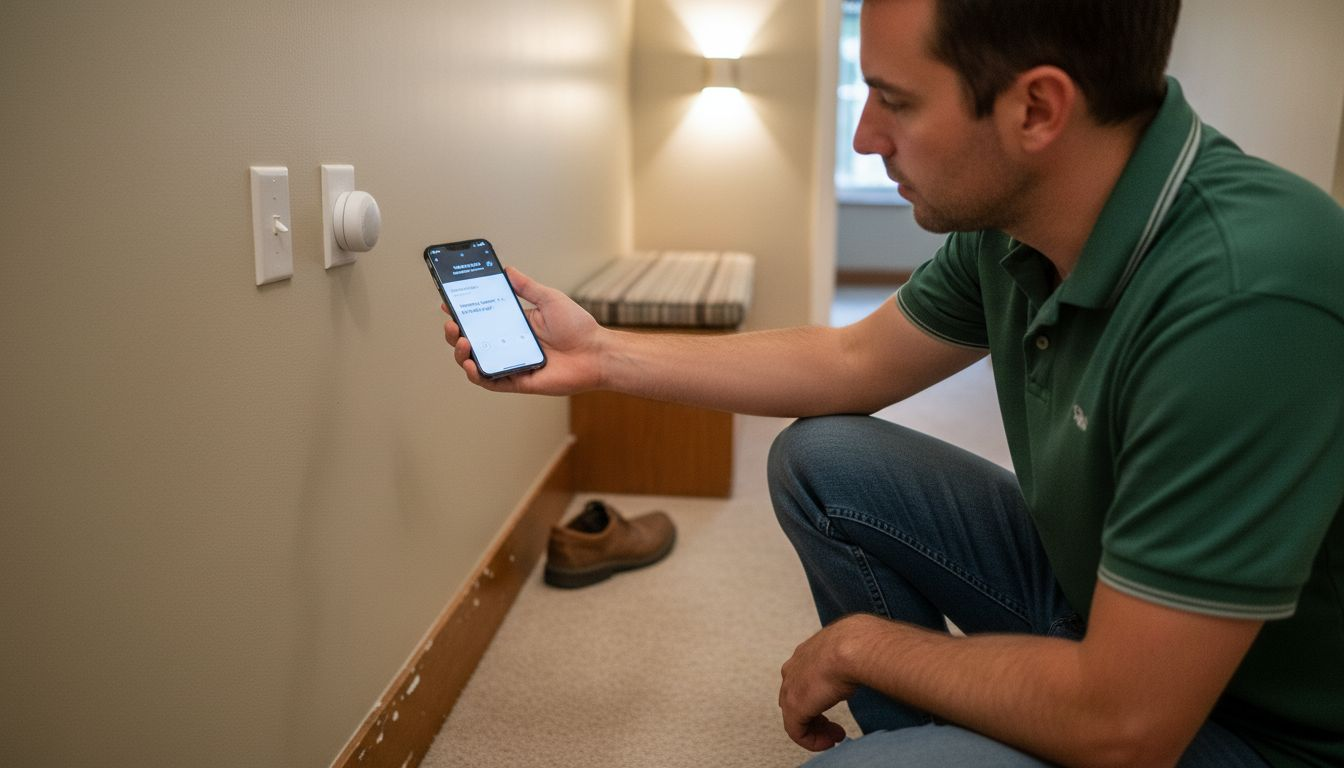
Typical wireless lighting automation systems integrate multiple components including motion sensors, photocells, central control hubs, and smart bulbs or fixtures. These components communicate seamlessly through mesh networks, which provide robust and flexible connectivity. The system can create sophisticated lighting scenes that adapt dynamically - dimming lights when rooms are unoccupied, adjusting brightness based on available daylight, or simulating occupancy patterns for enhanced home security. Advanced wireless protocols ensure reliable communication, minimal interference, and the ability to control lighting from smartphone apps or voice-activated home assistants.
Pro tip: When implementing a wireless lighting automation system, prioritize devices that support multiple communication protocols to ensure maximum compatibility and future-proofing of your home automation infrastructure.
Here’s a comparison of common wireless communication protocols used in home lighting automation:
| Protocol | Range | Power Consumption | Common Use Case |
|---|---|---|---|
| Wi-Fi | Up to 150 feet | Moderate to high | Whole-home smart lighting |
| Zigbee | Up to 100 feet | Low | Mesh networking for sensors |
| Z-Wave | Up to 300 feet | Very low | Secure lighting and security |
| Wireless DALI | Up to 1000 feet | Low to moderate | Large-scale professional setups |
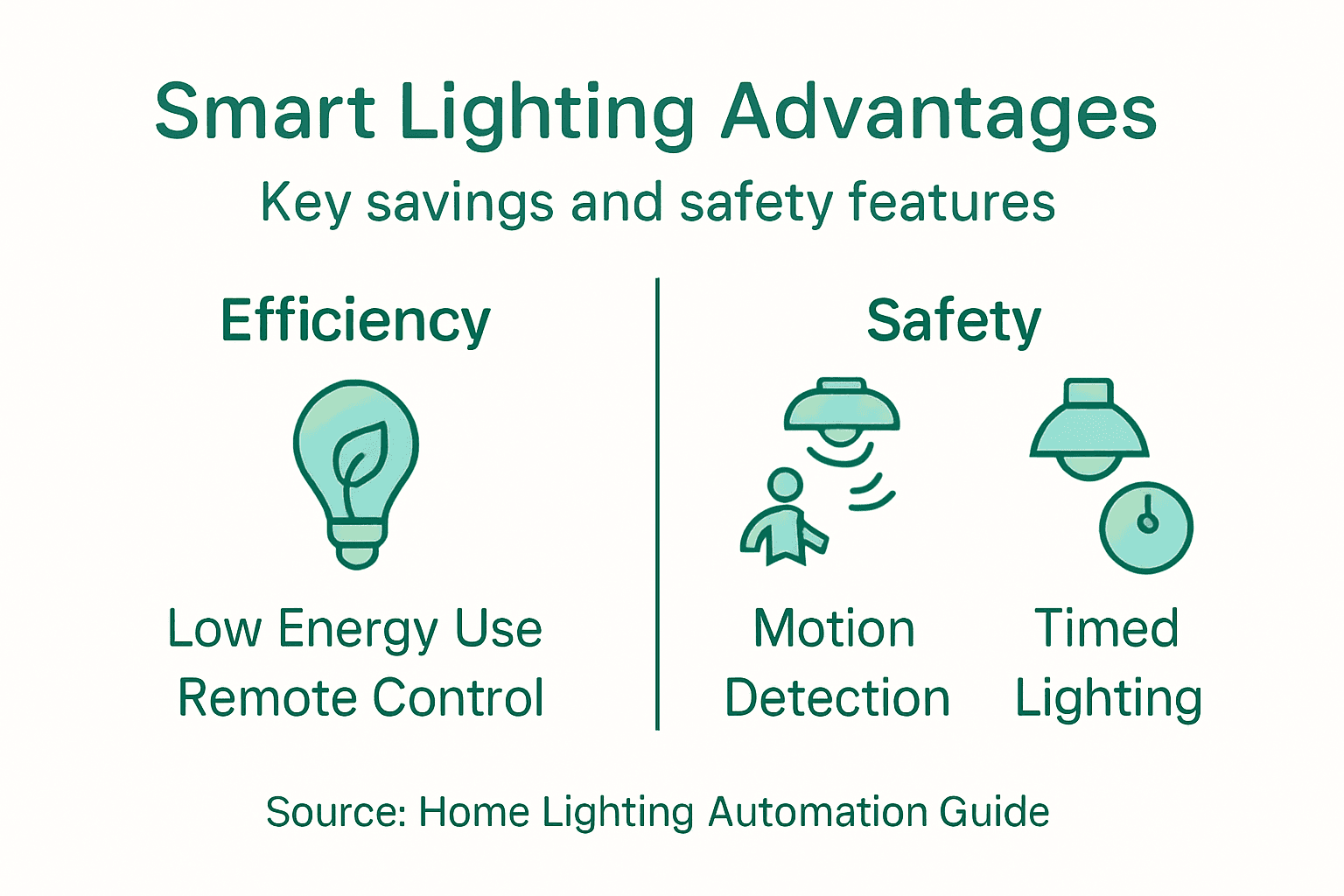
Home lighting automation delivers substantial advantages in both personal safety and financial efficiency, transforming how homeowners manage their residential environments. Lighting control systems provide multiple layers of protection and cost reduction through intelligent design and strategic implementation of smart technologies.
Safety benefits emerge through multiple sophisticated mechanisms that go beyond traditional lighting approaches. Home automation systems create intelligent security environments by automatically activating lights in response to movement, simulating occupancy during extended absences, and providing seamless integration with broader home security networks. Motion-activated lighting reduces accident risks in dark areas like hallways and stairs, while also functioning as an effective deterrent against potential intruders by creating the impression of an actively monitored home.
Energy savings represent another critical advantage of smart lighting automation. Intelligent systems continuously monitor and adjust lighting based on actual occupancy, natural light conditions, and user-defined preferences. By automatically dimming or switching off lights in unoccupied spaces, these technologies can reduce electricity consumption significantly - often achieving 30-50% lower energy costs compared to traditional lighting setups. Advanced sensors and self-learning algorithms enable precise energy management, dynamically optimizing illumination while minimizing unnecessary power usage across residential spaces.
Pro tip: Consider implementing smart lighting in high-traffic areas first, like kitchens and hallways, to maximize immediate safety and energy savings with minimal initial investment.
Home lighting automation presents a range of cost options, from budget-friendly smart bulbs to comprehensive networked systems that can significantly transform residential environments. Lighting control device costs vary widely, offering homeowners multiple entry points for implementing smart lighting technologies without requiring massive financial investments.
DIY installation of smart lighting systems demands careful consideration and strategic planning to avoid common pitfalls. Home automation installation challenges can include complex network configurations, device compatibility issues, and potential security vulnerabilities that unexperienced users might overlook. Typical mistakes include selecting incompatible dimmer switches for LED bulbs, improperly placing motion sensors that generate false triggers, or failing to establish secure network connections between smart devices.
Here’s a summary of potential DIY smart lighting mistakes and ways to avoid them:
| Common Mistake | Impact | How to Avoid |
|---|---|---|
| Using incompatible dimmers | Flickering or non-working lights | Buy dimmers rated for smart LEDs |
| Incorrect sensor placement | False triggers or missed motion | Test positions before final install |
| Weak network security | Hacking risk or outages | Set strong passwords, update devices |
| Starting too complex | Project frustration | Begin with one room, scale slowly |
Cost considerations extend beyond initial equipment purchases, encompassing long-term energy savings and potential system expansion. Smart lighting solutions range from individual smart bulbs priced around $10-$30 to complete home automation systems costing several hundred dollars. While budget-friendly options exist, investing in high-quality, interoperable devices can prevent future replacement costs and ensure seamless integration. Homeowners should prioritize scalable systems that support multiple communication protocols, allowing gradual upgrades without completely redesigning their initial setup.
Pro tip: Start with a small, controlled smart lighting project in a single room to gain hands-on experience and understand system complexities before committing to a full home installation.
Discover how simple it can be to solve common home lighting challenges like complex setup, energy waste, and lack of customization. The article covers key pain points such as motion-activated controls, occupancy sensors, and wireless network compatibility that help make lighting safer, smarter, and more efficient. At TryIlluminate.co, we offer a curated selection of user-friendly solutions that bring these concepts to life with zero wiring and easy installation.
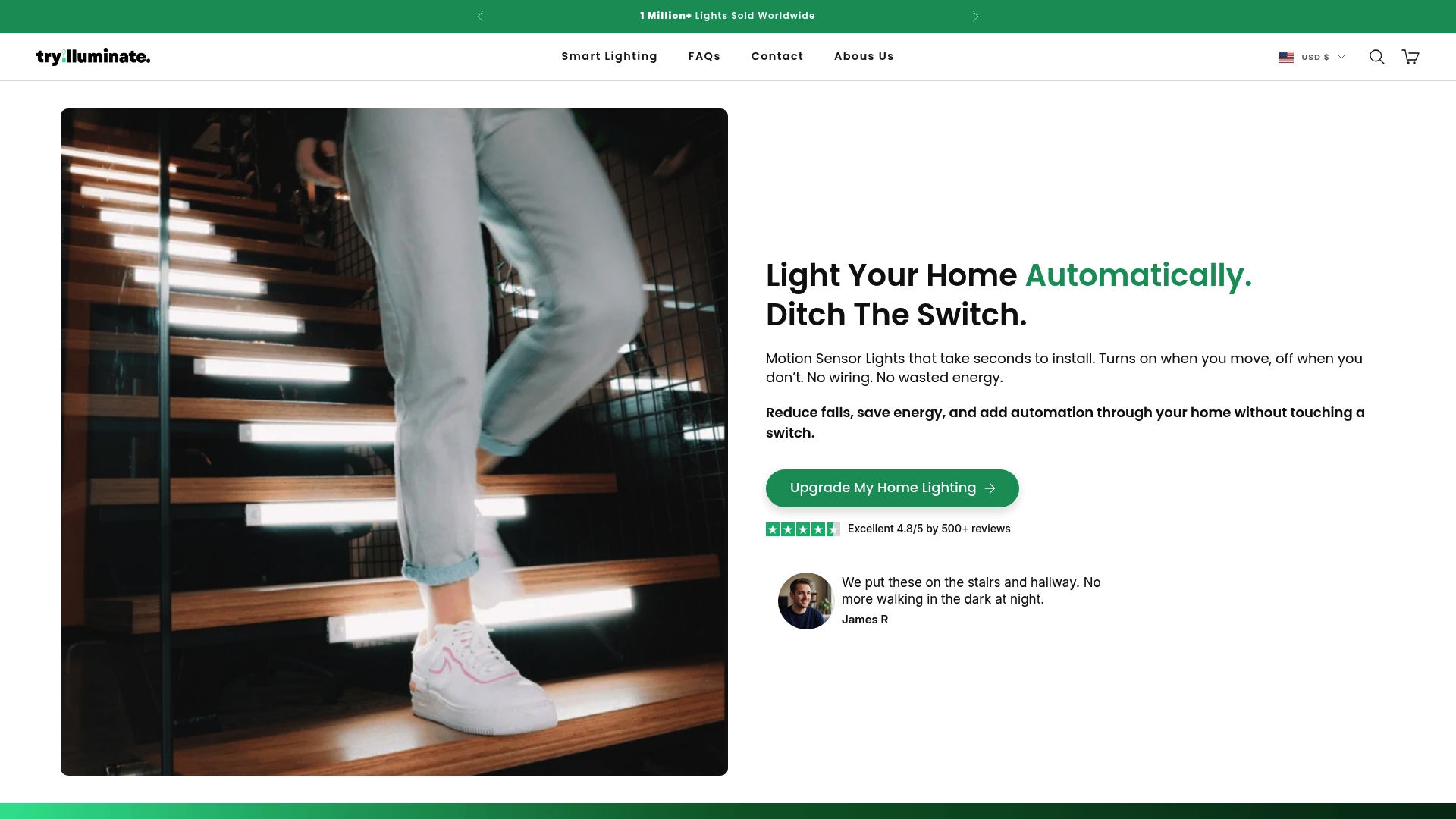
Explore our Smart Motion Sensor Lights Collection designed to enhance home safety and save energy by automatically adapting to your lifestyle. Our products feature rechargeability, daylight detection, and adjustable tones for maximum comfort. Don’t wait to transform your home ambiance and cut energy costs. Visit our Best Sellers page for customer favorites and get started with smart lighting today. Take the first step to a smarter home at TryIlluminate.co.
Home lighting automation offers enhanced safety by integrating motion-activated lights and simulating occupancy. It also provides significant energy savings, reducing electricity costs by 30-50% compared to traditional lighting through intelligent management of lights based on occupancy and natural light conditions.
Wireless lighting automation systems use wireless protocols like Wi-Fi, Zigbee, and Z-Wave to connect smart bulbs, sensors, and control hubs. They continuously monitor factors such as occupancy and daylight to adjust lighting dynamically, optimizing both energy efficiency and user comfort.
Common types of smart lighting systems include motion sensor lights, occupancy sensors, photocells, timer-based controls, and fully networked intelligent lighting networks, each designed to enhance convenience, security, and energy management in residential environments.
To avoid DIY mistakes, ensure that you use compatible dimmer switches for smart LEDs, properly place motion sensors to avoid false triggers, maintain strong network security for your devices, and begin with a single room project to understand the system complexities before expanding.

How to Set Up Wireless Lights for Smart Home Convenience
Discover how to set up wireless lights step by step for a smarter, safer home. Learn installation, customization, and quality checks for easy lighting upgrades.
Read more
Rechargeable Lighting: Transforming Home Convenience
Rechargeable lighting offers hassle-free installation and energy savings. Learn about types, features, real-home uses, costs, and key safety tips.
Read more